As part of the exhibition “Disposing of Hitler. From the Cellar to the Museum”, we cordially invite you to a lecture by Beatrice Falcucci. Afterwards, there will be a guided tour of the exhibition with the curator Andrea di Michele.
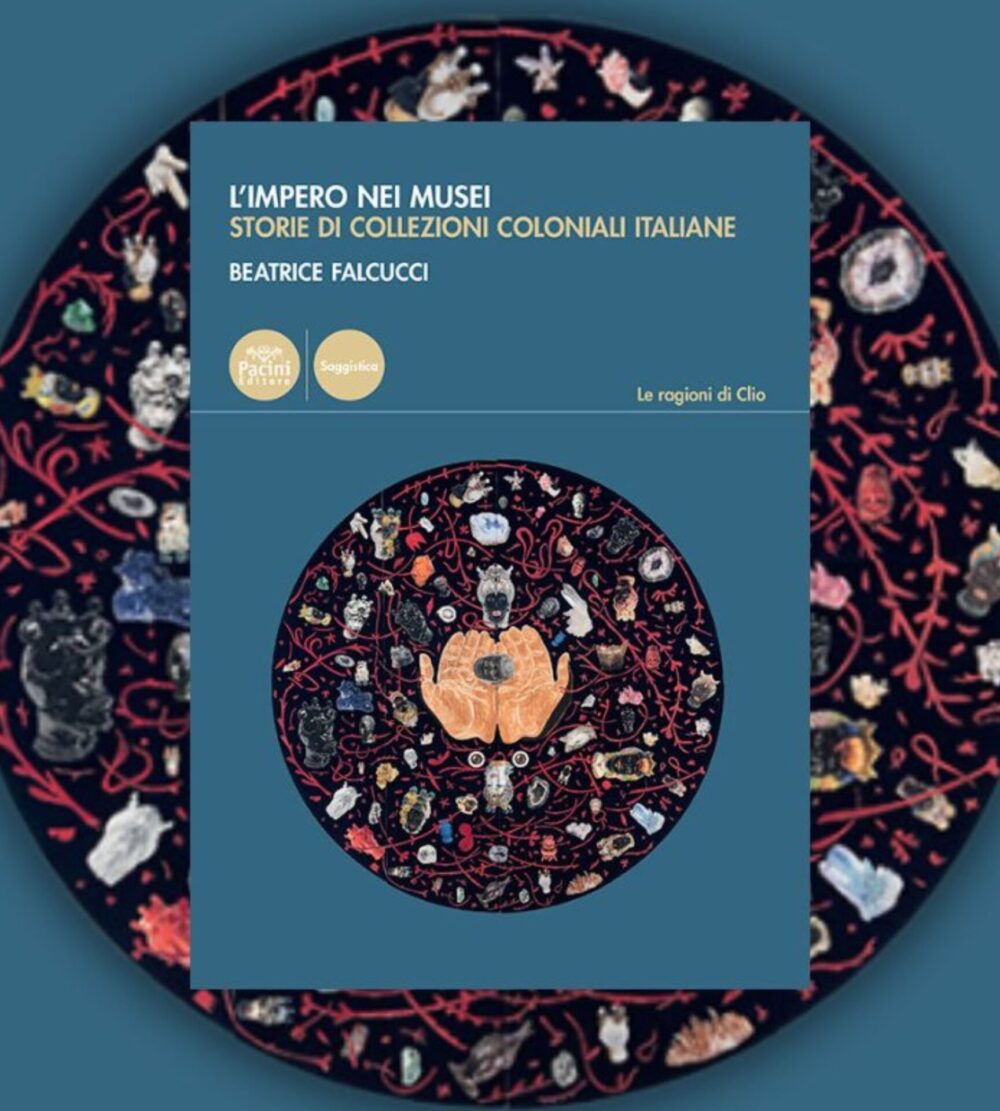
Based on the book “L’impero nei musei. Storie di collezioni coloniali italiane” (Pacini editore, 2025), the lecture will address the presence of collections from Italy’s former African colonies (Eritrea, Somalia, Libya, Ethiopia) within Italian institutions. It will discuss how these objects were acquired, their provenance, the individuals who collected and musealized them, and the ways in which they were presented to the public during the liberal and fascist periods. Finally, the focus will be on how these collections survived through the Republican era and into the present day.
L’impero nei musei. Storie di collezioni coloniali italiane
(The Empire in the Museums. Histories of Italian Colonial Collections)
From the beginnings of Italian explorations in Africa and throughout the colonial period, objects and specimens from overseas reached the Italian peninsula and found their place in temporary exhibitions and over a hundred permanent displays, where they were studied, described, and presented to the public. Thanks to extensive research in museums, libraries, and archives, this book reconstructs for the first time in a comprehensive way the origins, structure, and postcolonial trajectories of these collections.
The diversity, scope, and formation of these collections are closely intertwined with the crucial roles played by curators, officials, and scholars. The analysis of the complex relationships between objects, knowledge, colonial policy, and institutions — from the liberal era through the twenty-year Fascist period and into the Republic — reveals an essential component of the historical experience of colonialism. Moreover, museums serve as a valuable observatory for understanding the impact of this experience on the course of national history and for engaging with recent debates about the material legacy of colonialism in contemporary Italy.
The event, held in Italian, is open to all interested visitors. Admission is free.
Address
Brennerstraße | Via Brennero
39045 Franzensfeste | Fortezza (BZ)
South Tyrol – Italy